
Self-paced short course for women · 3 short lessons· Finish in a week
Trauma & The Body:
Your Body Isn't Broken. It's Protecting You.
This short course breaks down what chronic stress and trauma actually do to your physiology — 3 lessons, most people finish it in a week — so you can stop fighting your body's signals and start working with them.
Self-paced short course for women · 3 short lessons· Finish in a week
Trauma & The Body: Your Body Isn't Broken. It's Protecting You.
This short course breaks down what chronic stress and trauma actually do to your physiology — 3 lessons, most people finish it in a week — so you can stop fighting your body's signals and start working with them.
Created by Kikki O'Brien
Personal trainer
Mental Health First Aid certified
Evidence-based, no hype
Created by Kikki O'Brien
Personal trainer
Mental Health First Aid certified
Evidence-based, no hype
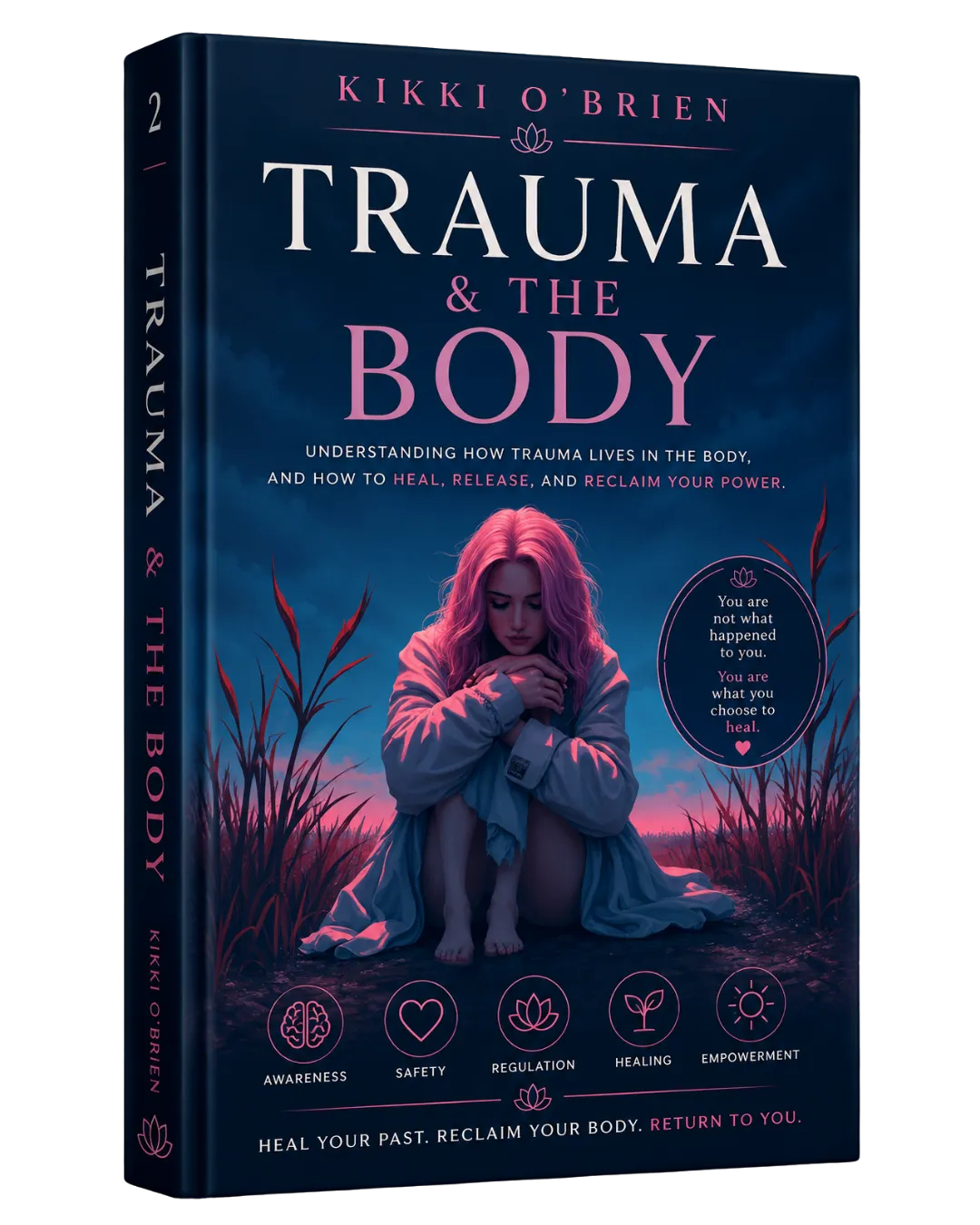
Get it for only
$197 USD
Learn at your own pace, on your own schedule.
Sound familiar?
Training and health advice was never built for your body
“I'm doing everything right, but my body won't switch off.”
That's not a discipline problem. A nervous system stuck in survival mode doesn't respond to better habits — it responds to safety, and that's built differently.
“I know what to do. I just can't make it stick.”
When training ignores what your nervous system is doing that day, it adds stress instead of releasing it. Nothing built on that lasts.
“I want to feel safe and at home in my own body again.”
It isn't. It's sending signals all day long — you've just never been taught how to read them.
None of this means you're weak or broken. These are protective responses doing their job long after the threat has passed. Once you can read what your body is signalling, regulation becomes something you can practice instead of wait for.
Get it for only
$197 USD
Learn at your own pace, on your own schedule.
Why this works
Trauma lives in physiology, not memory. The HPA axis, vagal tone, gut permeability, muscle guarding — these are measurable systems, and they're where the symptoms actually come from.
Your nervous system state decides what a workout does to you. The same session can regulate you on a settled day and flatten you on a dysregulated one. Reading the state comes before choosing the training.
Regulation is a skill, not a mood. Orientation, breath pacing, rhythmic movement — these are trainable. You're not waiting to feel better; you're practicing something.
What this course isn't
✗ Not therapy, and not a replacement for your GP or psychologist
✗ Not trauma processing — we don't go into your history
✗ Not a somatic-release program promising you'll "shake it out"
✓ A clear, science-based explanation of how trauma affects the body, and practical ways to support regulation
INSIDE THE SHORT COURSE
What you'll learn

1. How Trauma Shapes The Body
Why trauma shows up physically, not just emotionally.
The nervous system and threat response
The HPA axis and stress hormones
Energy, fatigue and burnout
Chronic tension and pain
Gut health and inflammation
Emotional regulation
Neuroplasticity and change
The nervous system and threat response
The HPA axis and stress hormones
Energy, fatigue and burnout
Chronic tension and pain
Gut health and inflammation
Emotional regulation
Neuroplasticity and change

2. Movement For Nervous System Regulation
Learn how movement can become a powerful tool for healing, regulation, and resilience.
Vagal tone and why it matters
Breathwork for regulation
Matching movement intensity to your nervous system state
Training with your cycle, not against it
Daily habits that support regulation

3. Building A Trauma-Informed Practice
How to turn all of it into something you'll actually keep doing.
Recognise your own nervous system states
Train in a way that respects where you are that day
Build flexibility instead of chasing perfection
Know the difference between discomfort and dysregulation
Know when to bring something to a professional
WHO THIS IS FOR
This short course is for you if…
Your stress seems to live in your body — tension, fatigue, gut issues, poor sleep
All-or-nothing training keeps backfiring on you
You're a coach or trainer who wants to work in a genuinely trauma-informed way
You want gentle, practical, science-based tools — not pressure
This probably isn't for you if…
You want trauma therapy. This course explains the physiology and gives you regulation tools. It doesn't process what happened to you, and it isn't a substitute for working with a therapist.
You want a structured workout program. This teaches you how to read your nervous system and match movement to it — not what sets and reps to do.
You're in crisis or struggling to stay safe right now. Please reach out to your GP, Lifeline on 13 11 14, or the Blue Knot Helpline on 1300 657 380 for trauma-specific support.
OUTCOMES
By the end, you'll…
Understand exactly how trauma and chronic stress reshape the body
Have a 5-minute regulation toolkit you can use anywhere, in any state
Know how to match movement to your nervous system — on good days and hard ones
Apply trauma-informed principles to your own training or your coaching practice
INSIDE THE SHORT COURSE
What you'll learn
1. How Trauma Shapes The Body
Why trauma shows up physically, not just emotionally.
The nervous system and threat response
The HPA axis and stress hormones
Energy, fatigue and burnout
Chronic tension and pain
Gut health and inflammation
Emotional regulation
Neuroplasticity and change
The nervous system and threat response
The HPA axis and stress hormones
Energy, fatigue and burnout
Chronic tension and pain
Gut health and inflammation
Emotional regulation
Neuroplasticity and change
2. Movement For Nervous System Regulation
Learn how movement can become a powerful tool for healing, regulation, and resilience.
Vagal tone and why it matters
Breathwork for regulation
Matching movement intensity to your nervous system state
Training with your cycle, not against it
Daily habits that support regulation
3. Building A Trauma-Informed Practice
How to turn all of it into something you'll actually keep doing.
Recognise your own nervous system states
Train in a way that respects where you are that day
Build flexibility instead of chasing perfection
Know the difference between discomfort and dysregulation
Know when to bring something to a professional
WHO THIS IS FOR
This short course is for you if…
Your stress seems to live in your body — tension, fatigue, gut issues, poor sleep
All-or-nothing training keeps backfiring on you
You're a coach or trainer who wants to work in a genuinely trauma-informed way
You want gentle, practical, science-based tools — not pressure
This probably isn't for you if…
You want trauma therapy. This course explains the physiology and gives you regulation tools. It doesn't process what happened to you, and it isn't a substitute for working with a therapist.
You want a structured workout program. This teaches you how to read your nervous system and match movement to it — not what sets and reps to do.
You're in crisis or struggling to stay safe right now. Please reach out to your GP, Lifeline on 13 11 14, or the Blue Knot Helpline on 1300 657 380 for trauma-specific support.
OUTCOMES
By the end, you'll…
Understand exactly how trauma and chronic stress reshape the body
Have a 5-minute regulation toolkit you can use anywhere, in any state
Know how to match movement to your nervous system — on good days and hard ones
Apply trauma-informed principles to your own training or your coaching practice
Cert III & IV in Fitness
Mental Health First Aid Certified
CPR & First Aid Certified
Certified Neuroscience-Based PDP
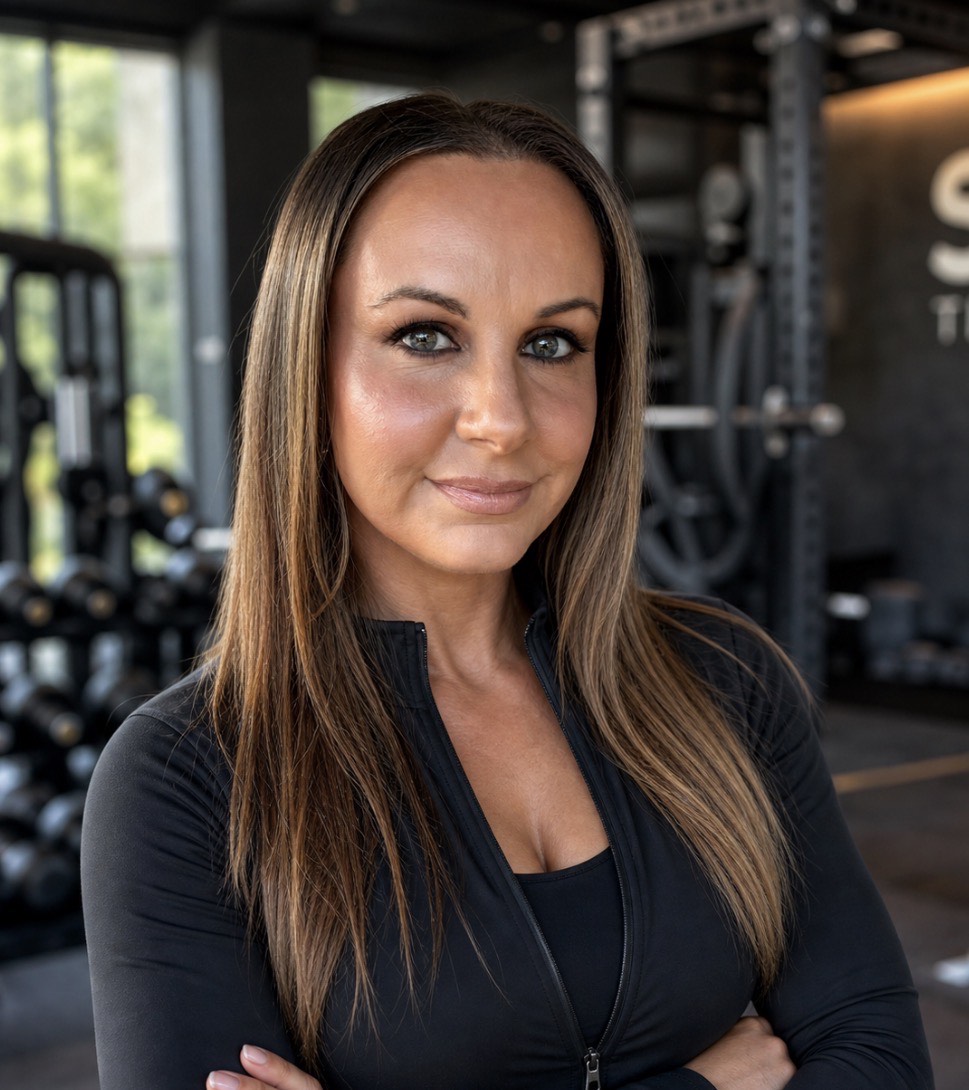
Meet your coach
Hi, I'm Kikki — and I built KIKO because I needed it too
I'm a personal trainer and health consultant, a mum of two, and a neurodivergent woman living with ADHD and Functional Neurological Disorder. I know exactly how hard it is to prioritize your health when life won't slow down for you.
That's why KIKO treats the mind and body as one project, not two — combining science-based strength training with neuroscience, hormone health and real-life practicality.
Cert III & IV in Fitness
Mental Health First Aid Certified
CPR & First Aid Certified
Certified Neuroscience-Based PDP
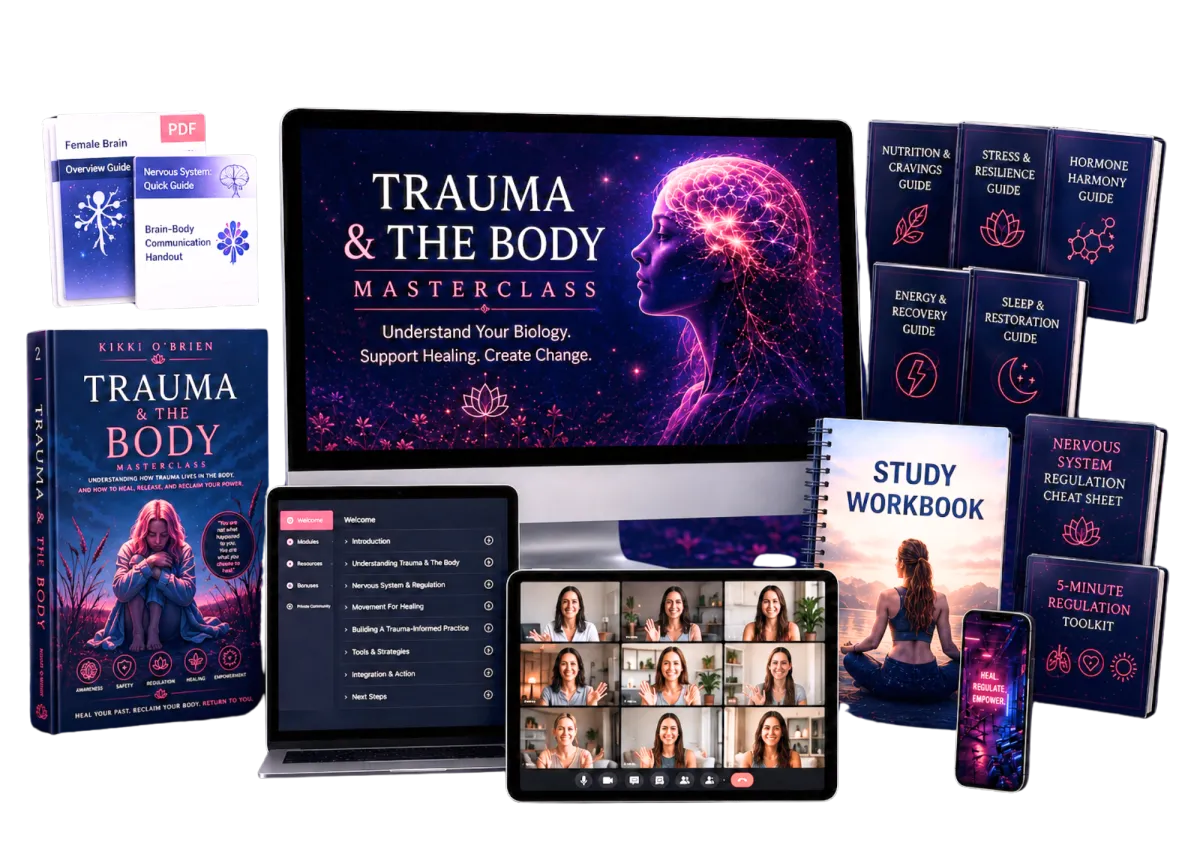
Everything you get
Your Enrollment Includes:
One payment, instant access, and 12 months to learn at your own pace. It's not just lessons: you also get practical tools to track, plan and act on what you learn.
What's included
3 lessons on trauma, stress and nervous system regulation
The Trauma & The Body Workbook — guided exercises, reflection prompts, self-assessments and action plans, so you actually apply what you learn
Resource Guide — a practical reference on trauma physiology, stress responses and regulation
Nervous System Self-Assessment — identify your stress patterns, survival responses and where you've got room to grow
Also included
Nervous System Regulation Toolkit — evidence-based techniques for stress, resilience and emotional regulation
Trauma Recovery Journal Prompts — designed to deepen awareness and reflection
Trauma-Informed Habit Building Workbook — build habits that don't tip you into overwhelm
Private community access — support and accountability with other women doing the same work
Everything unlocks instantly, and it's yours to use for 12 months.
Because everything unlocks instantly the moment you enroll, we don't offer change-of-mind refunds. This doesn't affect your rights under the Australian Consumer Law. Not sure yet? Book a free 20-minute consult and we'll talk it through first.
This short course is one of ten inside the full 12-week KIKO Masterclass (US$999). Love this one? If you decide to go all in after finishing this one, we'll credit your $197 USD toward it within 12 months of enrolling Book a free consult and we'll chat about whether the full program is your next step.
What women say about KIKO
The KIKO Method itself is new — these are real, unedited testimonials from women who've taken the individual short courses that make up the program.
"Our mission is to support women in building stronger bodies and healthier minds through science-based training and holistic wellbeing practices — going beyond appearance to understanding your body, supporting your mental wellbeing, and creating sustainable habits that promote strength, resilience, and longevity."
GOOD TO KNOW
Frequently asked questions
Is this therapy?
No. This is an educational course about how trauma and stress affect the body, and how movement can support regulation. It can sit alongside professional mental-health support, but it never replaces it. If you're struggling, please reach out to a qualified therapist or your doctor.
How does the course work, and how long do I get?
You get instant access the moment you enrol. Everything is self-paced — watch the lessons whenever suits your week — and you keep access for 12 months, including any future updates and improvements at no extra cost.
I'm a coach or personal trainer — is this relevant to me?
Very. The third lesson is built specifically around trauma-informed practice: creating safety and trust, consent-based coaching, and adapting training to a client's nervous system readiness.
Can I upgrade to the full 12-week Masterclass later?
Yes. This short course is one of ten inside the 12-week KIKO Masterclass ($999), which covers your brain, hormones, gut, strength, sleep and long-term wellness. If you'd like to upgrade after finishing this short course, just get in touch — that's exactly what the free consult is for.
YOUR INVESTMENT
You don't need more resilience.
You need to understand what your body is doing.
What you learn in these three lessons can change how you read your own signals — your energy, your tension, your sleep — for years to come. $197 USD — one payment, 12 months' access. Less than a month of most gym memberships. This one you keep.
Because everything unlocks instantly the moment you enroll, we don't offer change-of-mind refunds. This doesn't affect your rights under the Australian Consumer Law. Not sure yet? Book a free 20-minute consult and we'll talk it through first.
One-time payment · No subscriptions · No hidden fees
Questions? Contact us at [email protected]
KIKO MIND & BODY © 2026. All rights reserved
Disclaimer: All content on Kiko Mind & Body is provided for informational and educational purposes only. It is not intended to diagnose, treat, cure, or prevent any physical or mental health condition, nor should it replace professional medical, nutritional, or psychological advice. Always consult a qualified healthcare professional regarding any medical concerns. Use of this site and its resources is strictly at your own risk.