
Self-paced short course for women · 3 short lessons· Finish in a week
Mental Health and Movement: why some workouts calm you and others leave you wired
Learn how different types of movement affect your brain chemistry, and how to choose the right one for the day you're actually having: stressed, flat, or scattered.
Created by Kikki O'Brien
Personal trainer
Mental Health First Aid certified
Evidence-based, no hype
Created by Kikki O'Brien
Personal trainer
Mental Health First Aid certified
Evidence-based, no hype
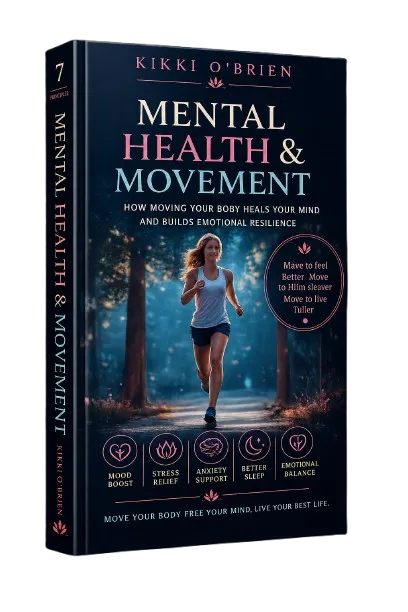
Get it for only
$197 USD
Learn at your own pace, on your own schedule.
Sound familiar?
Exercise is supposed to help your mood. So why doesn't it always?
“Some workouts calm me down. Others leave me more wired.”
That's not random — different types of exercise trigger completely different neurochemical responses, and most people have never been shown the difference.
“I know exercise is supposed to help my mood, but it doesn't always feel that way.”
Matching the right movement to your nervous system state is the missing piece — this course shows you how.
“I can't sustain a routine on willpower alone.”
Motivation fades. The environment around you is what actually keeps a habit alive — and that's something you can design.
None of this means you're lazy or broken. Movement affects your brain chemistry, and different types do different things. Once you know which is which, exercise becomes something you can use on purpose.
Get it for only
$197 USD
Learn at your own pace, on your own schedule.
Why this works
Different movement, different chemistry. A hard interval session and a slow walk trigger different responses in your brain. Neither is "better". They do different jobs.
Your state changes the effect. Stress, sleep and your cycle all change how a workout lands. The same session can help one day and drain you the next.
Habits stick because of your environment, not your willpower. Change the people, places and cues around you and movement stops depending on motivation.
What this course isn't
✗ Not a workout program or a 30-day challenge
✗ Not therapy, and not a replacement for your GP or psychologist
✗ Not "exercise cures everything" hype
✓ A clear, science-based explanation of how movement affects your mind, and simple ways to use it
INSIDE THE SHORT COURSE
What you'll learn

1. The Neurochemistry of Exercise
Different kinds of movement create different chemical responses in your brain. Learn which types tend to lift your mood, which can leave you more wired, and why your cycle changes the effect.
Which movement tends to boost endorphins, dopamine and serotonin
Why harder isn't always better for your mood
How your hormones can change how a workout feels
How much is enough, and why recovery matters for your mind

2. Movement For Emotional Regulation
Your emotions show up in your body, so your body can help settle them. Learn simple ways to use a walk, a short break, or even your posture when you feel overwhelmed, anxious or scattered.
Quick resets for when you feel wired or overwhelmed
Rhythmic movement, like walking, that helps you settle
How to adjust your training on high-stress days
Pairing breath with strength work so effort doesn't spike your stress

3. Building A Supportive Environment
Motivation comes and goes. The people, places and routines around you are what keep a habit going. Learn how to set them up so movement becomes the easy option.
Building a support circle that keeps you going
Knowing when to bring in your GP, a psychologist or another professional
Setting up your home, phone and week to make movement easier
How to ask for what you need, without feeling like a burden
1. The Neurochemistry of Exercise
Different kinds of movement create different chemical responses in your brain. Learn which types tend to lift your mood, which can leave you more wired, and why your cycle changes the effect.
Which movement tends to boost endorphins, dopamine and serotonin
Why harder isn't always better for your mood
How your hormones can change how a workout feels
How much is enough, and why recovery matters for your mind
2. Movement For Emotional Regulation
Your emotions show up in your body, so your body can help settle them. Learn simple ways to use a walk, a short break, or even your posture when you feel overwhelmed, anxious or scattered.
Quick resets for when you feel wired or overwhelmed
Rhythmic movement, like walking, that helps you settle
How to adjust your training on high-stress days
Pairing breath with strength work so effort doesn't spike your stress
3. Building A Supportive Environment
Motivation comes and goes. The people, places and routines around you are what keep a habit going. Learn how to set them up so movement becomes the easy option.
Building a support circle that keeps you going
Knowing when to bring in your GP, a psychologist or another professional
Setting up your home, phone and week to make movement easier
How to ask for what you need, without feeling like a burden
WHO THIS IS FOR
This short course is for you if…
Your mood and energy feel unpredictable depending on how (or whether) you move
You want to use exercise deliberately for anxiety, stress or low mood
Motivation alone hasn't been enough to keep a movement habit going
You want practical, science-based tools you can use the same day
This probably isn't for you if…
You want a structured workout program. This course teaches you how to use movement, not what sets and reps to do.
You're looking for treatment for a mental health condition. This works alongside professional care.
You're struggling to stay safe right now. Please contact your GP, or Lifeline on 13 11 14.
OUTCOMES
By the end, you'll…
Understand exactly how different types of exercise affect your brain chemistry
Have go-to movement tools to help settle stress and refocus
Know how to match exercise intensity to your current nervous system state
Build a supportive environment that sustains your habits long-term

Cert III & IV in Fitness
Mental Health First Aid Certified
CPR & First Aid Certified
Certified Neuroscience-Based PDP
Meet your coach
Hi, I'm Kikki — and I built KIKO because I needed it too
I'm a personal trainer and health consultant, a mum of two, and a neurodivergent woman living with ADHD and Functional Neurological Disorder. I know exactly how hard it is to prioritize your health when life won't slow down for you.
That's why KIKO treats the mind and body as one project, not two — combining science-based strength training with neuroscience, hormone health and real-life practicality.
Cert III & IV in Fitness
Mental Health First Aid Certified
CPR & First Aid Certified
Certified Neuroscience-Based PDP
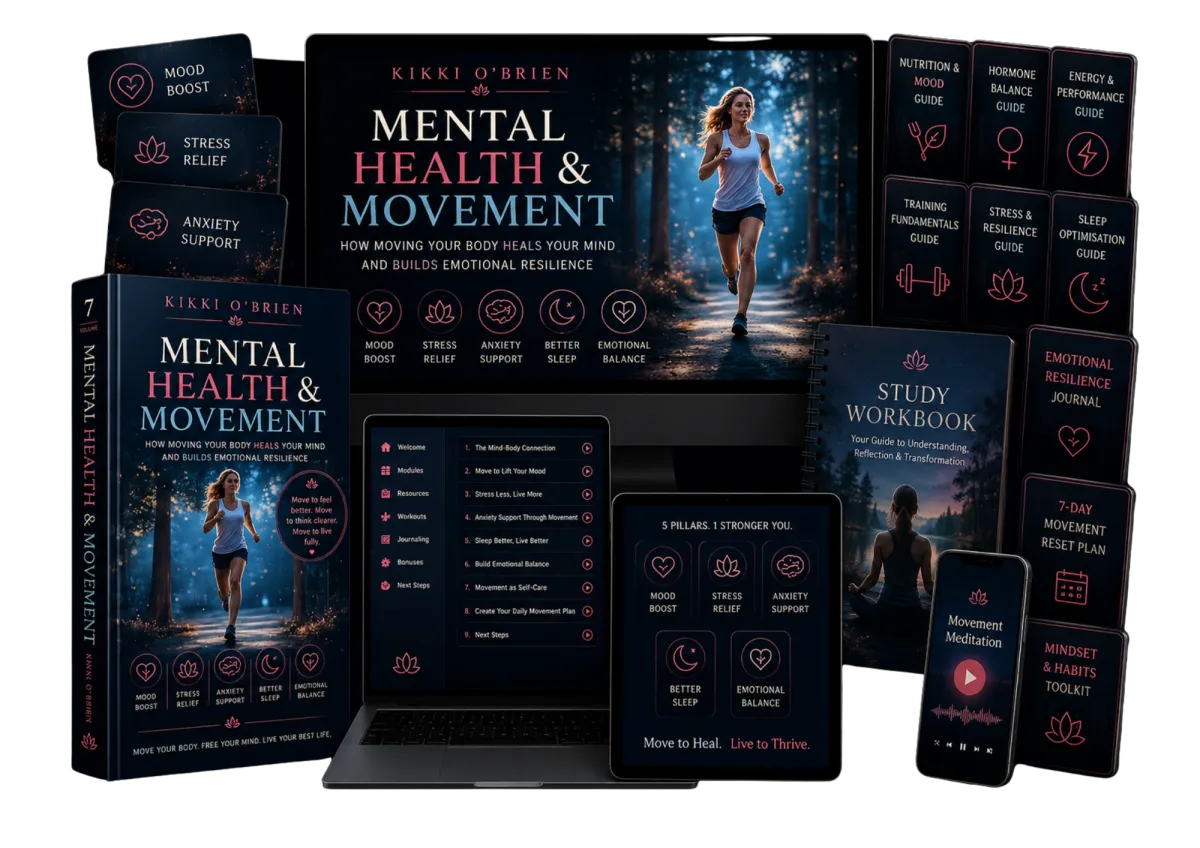
Everything you get
Your Enrollment Includes:
One payment, instant access, and 12 months to learn at your own pace. It's not just lessons: you also get simple tools to use in real life.
What's included
3 video lessons
How movement affects your brain chemistry, how to use it for stress and mood, and how to make it last.Course workbook
Reflection prompts and short exercises for each lesson, so you work out what applies to you.Movement & Mood Resource Guide
An evidence-based guide to how walking, strength training, yoga and more may support your mood, stress, sleep and focus.5-Minute Nervous System Reset
A short practice using grounding, gentle movement and breathing, for when you need to calm down fast.14-Day Mood & Movement Tracker
A simple daily log to help you notice how movement, sleep, energy and mood connect for you.
Also included
30-Day Wellbeing Plan
A flexible month of small, doable steps to test what actually helps you. Nothing all-or-nothing.Support Network Planning Worksheet
Map out the people and services you can lean on, before you need them.Communication Scripts & Checklists
Ready-to-use words for asking for support, saying what you need, and taking the next step.Australian Support Pathways
A clear list of trusted Australian services and crisis contacts, for when you need professional or urgent help.Private Community Access
Connect with other women doing the same work, for encouragement and accountability.
Everything unlocks instantly, and it's yours to use for 12 months.
Because everything unlocks instantly the moment you enroll, we don't offer change-of-mind refunds. This doesn't affect your rights under the Australian Consumer Law. Not sure yet? Book a free 20-minute consult and we'll talk it through first.
This short course is one of ten inside the full 12-week KIKO Masterclass ($999). Love this one? If you decide to go all in after finishing this one, we'll credit your $197 USD toward it within 12 months of enrolling Book a free consult and we'll chat about whether the full program is your next step.
What women say about KIKO
The KIKO Method itself is new — these are real, unedited testimonials from women who've taken the individual short courses that make up the program.
"Our mission is to support women in building stronger bodies and healthier minds through science-based training and holistic wellbeing practices — going beyond appearance to understanding your body, supporting your mental wellbeing, and creating sustainable habits that promote strength, resilience, and longevity."
GOOD TO KNOW
Frequently asked questions
Is this a replacement for therapy or medication?
No. This course teaches how movement influences brain chemistry and mood, and gives practical tools you can use alongside professional care — it isn't therapy and doesn't replace treatment from a qualified mental health professional.
How does the course work, and how long do I get?
You get instant access the moment you enrol. Everything is self-paced — watch the lessons whenever suits your week — and you keep access for 12 months, including any future updates and improvements at no extra cost.
What if I don't currently have a regular exercise routine?
That's fine — the tools in this course start with tiny, accessible movements (like a 5-minute reset), not a full workout plan. You can build from wherever you're starting.
Can I upgrade to the full 12-week Masterclass later?
Yes. This short course is one of ten inside the 12-week KIKO Masterclass (US$999), which covers your brain, hormones, gut, strength, sleep and long-term wellness. If you'd like to upgrade after finishing this short course, just get in touch and we'll credit the US$197 you paid for this course if you upgrade within 12 months — that's exactly what the free consult is for.
YOUR INVESTMENT
You don't need more motivation. You need to know which movement helps, and when.
Three short lessons. Tools you can use the same day. 12 months to come back to them. $197 USD — one payment, 12 months' access. Less than two personal training sessions. This one you keep.
YOUR INVESTMENT
You don't need more motivation. You need to know which movement helps, and when.
Three short lessons. Tools you can use the same day. 12 months to come back to them. $197 USD — one payment, 12 months' access. Less than a month of most gym memberships. This one you keep.
Because everything unlocks instantly the moment you enroll, we don't offer change-of-mind refunds. This doesn't affect your rights under the Australian Consumer Law. Not sure yet? Book a free 20-minute consult and we'll talk it through first.
One-time payment · No subscriptions · No hidden fees
Questions? Contact us at [email protected]
KIKO MIND & BODY © 2026. All rights reserved
Disclaimer: All content on Kiko Mind & Body is provided for informational and educational purposes only. It is not intended to diagnose, treat, cure, or prevent any physical or mental health condition, nor should it replace professional medical, nutritional, or psychological advice. Always consult a qualified healthcare professional regarding any medical concerns. Use of this site and its resources is strictly at your own risk.